


- Biographical Fiction
- Biographies, Memoirs
- Cooking, Food, Wine
- Entertainment, Lifestyle, Family, Home
- Graphic Novels
- Health, Mind, Body
- History
- Language Learning Materials
- Literature, Fiction
- Mystery, Thrillers
- Philosophy, Politics, Social Sciences
- Reference, Scientific
- Religion, Spirituality
- Romance
- Science Fiction, Fantasy
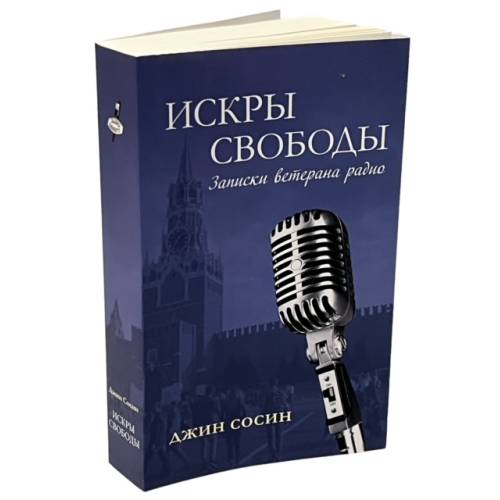
ИСКРЫ СВОБОДЫ. Записки ветерана радио
/ Ukrainian
ИСКРЫ СВОБОДЫ. Записки ветерана радио
ISKRY SVOBODY. Zapiski veterana radioSPARKS OF FREEDOM. Notes of a radio veteran
Джин Сосин (1924-2015) – один из создателей и руководителей Радио Освобождение (Свобода) – работал в Нью-Йорке и Мюнхене, возглавляя Программный отдел, организовал международные конференции и выступления в печати в защиту станции, приглашал к радиомикрофону западных деятелей культуры и политиков, наводя мосты между Америкой и Россией. Его мемуары – рассказ о холодной войне с человеческим лицом.
…Политические анекдоты известны в России с царских времен. Самое строгое наказание за них было при советской власти, особенно при Сталине. Рассказчика могли приговорить к 25 годам лагерей, а иногда и к смерти. Полные едкой иронии, анекдоты высмеивали пустые обещания и лозунги советской пропаганды. Мы часто начиняли наши программы острыми шипами, нацеленными в партию, КГБ, низкое качество повседневной жизни и прочие стороны действительности. Объединяя себя со слушателями в высмеивании ненавистной системы, Радио Свобода помогало своему образу суррогатного радио.
…Магнитиздат – записи непризнанных официальной пропагандой материалов, особенно запрещенных песен – занимал большое место в энергичной культуре «андерграунда», процветавшей в брежневскую пору. С начала семидесятых годов Радио Свобода начало собирать коллекцию пленок, привозимых на Запад эмигрантами, и передавать их обратно советским слушателям. Три «барда» были самыми популярными в то время: Булат Окуджава, Александр Галич и Владимир Высоцкий. Были известны также имена Юлия Кима (полурусского, полукорейца), Михаила Ножкина, Новеллы Матвеевой, Михаила Анчарова, Юрия Визбора, Анатолия Иванова и Евгения Клячкина.
…«Небесные» глушилки работали по принципу радиопередатчиков, посылая сигналы внутри Советского Союза как раз в те районы, на которые были направлены наши волны. Но благодаря тому, что высота ионосферы над Западной и Восточной Европой в течение суток меняется, сигналы советских передатчиков иногда растворялись в пространстве, и тогда радио можно было слушать без помех. Местные глушилки в больших городах были, конечно, намного сильнее описанных. Но прием можно было значительно улучшить, увеличив мощность сигнала. Советские граждане прибегали к разным хитростям: некоторые настраивались на край частотной полосы, другие покупали заграничные приемники или экспортные модели, у которых диапазон частот был шире, чем у отечественных. Умельцы - «радиодоктора» - ухитрялись приспособить для слушания зарубежных радиостанций даже советские приемники. За городом принимать сигнал было легче. Владельцы машин выезжали подальше от центра, а те, у кого была дача, даже записывали передачи на магнитофон.
Перевели с английского: Ольга Поленова и Иван Толстой. Под общей редакцией Ивана Толстого
Gene Sosin (1924-2015), one of the founders and leaders of Radio Liberation (Svoboda), worked in New York and Munich, heading the Program Department, organized international conferences and press appearances in defense of the station, invited Western cultural figures and politicians to the radio microphone, building bridges between America and Russia. His memoirs are a story about the Cold War with a human face.
...Political jokes have been known in Russia since tsarist times. The most severe punishment for them was under Soviet rule, especially under Stalin. The narrator could be sentenced to 25 years in camps, and sometimes to death. Full of biting irony, the jokes ridiculed the empty promises and slogans of Soviet propaganda. We often filled our programs with sharp spikes aimed at the party, the KGB, the low quality of daily life, and other aspects of reality. By joining itself with its listeners in ridiculing the hated system, Radio Liberty helped its image as a surrogate radio station.
...Magnitizdat – recordings of materials unrecognized by official propaganda, especially banned songs – occupied a large place in the vibrant underground culture that flourished during the Brezhnev era. Since the early seventies, Radio Liberty began collecting tapes brought to the West by emigrants and transmitting them back to Soviet listeners. Three "bards" were the most popular at that time: Bulat Okudzhava, Alexander Galich and Vladimir Vysotsky. The names of Yulia Kim (half-Russian, half-Korean), Mikhail Nozhkin, Novella Matveeva, Mikhail Ancharov, Yuri Vizbor, Anatoly Ivanov and Evgeny Klyachkin were also known.
... The "heavenly" jammers worked on the principle of radio transmitters, sending signals inside the Soviet Union to precisely those areas where our waves were directed. But due to the fact that the height of the ionosphere over Western and Eastern Europe varies during the day, the signals of the Soviet transmitters sometimes disappeared into space, and then the radio could be listened to without interference. The local jammers in big cities were, of course, much stronger than those described. But reception could be significantly improved by increasing the signal strength. Soviet citizens resorted to various tricks: some tuned to the edge of the frequency band, others bought foreign receivers or export models that had a wider frequency range than the domestic ones. The craftsmen, the "radio doctors," managed to adapt even Soviet receivers to listen to foreign radio stations. It was easier to receive the signal outside the city. Car owners drove away from the center, and those who had a summer cottage even recorded broadcasts on tape.
Translated from English by Olga Polenova and Ivan Tolstoy. Under the general editorship of Ivan Tolstoy
EAN: 9788090677968
OCLC: available